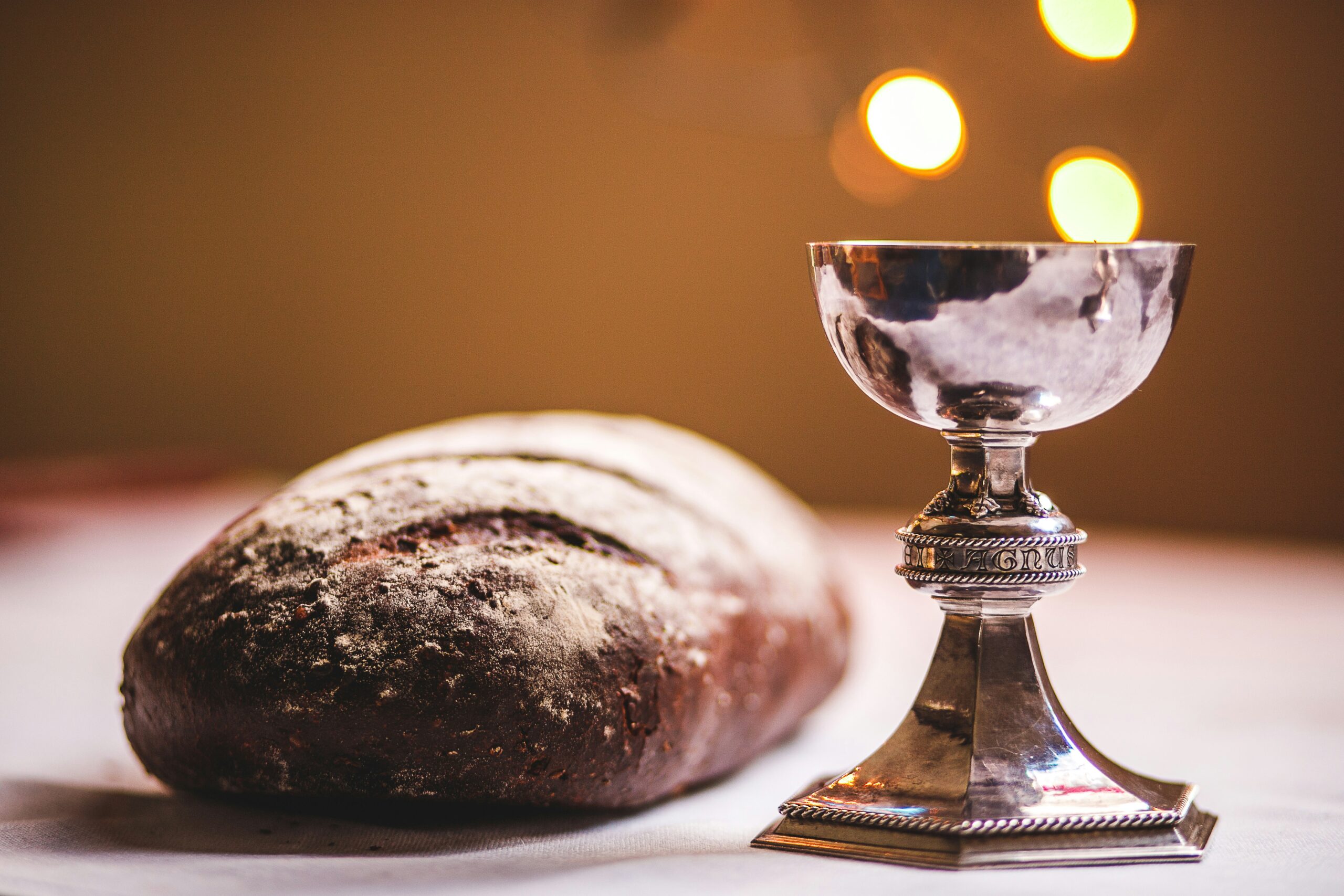
On the night when everything began to unravel, Jesus set the table.
It wasn’t a table filled with certainty or strength. It was surrounded by confusion, pride, fear, and the quiet tremor of coming failure. One would betray him. Another would deny him. All would scatter.
And still, Jesus broke the bread.
“This is my body,” he said. “Given for you.”
He lifted the cup. “This is my blood . . . poured out for you.”
This was his last meal before the cross. And yet, somehow, he spoke of it as a beginning: a meal that would not end, a feast fulfilled in his eternal kingdom. His last . . . would become our first.
If you’ve ever hesitated at that table — wondering if you belong, if you’re worthy — you are not alone. The first guests certainly weren’t.
Jesus knew exactly who they were. He didn’t wait for their repentance to mature or their courage to solidify. He gave himself to them knowing full well they would fail him within hours.
That’s the point.
This is a meal for failures.
This is a meal for those who are deeply loved by Jesus.
As Martin Luther once wrote, “Who receives this sacrament worthily? Fasting and bodily preparation are certainly fine outward training. But that person is truly worthy and well prepared who has faith in Jesus’ words: ‘Given and shed for you for the forgiveness of sins.’”
Luther says, “He is truly worthy who believes these words.”
Believing is the key. Not perfection. It’s not for the one who feels strong. Not for the one who has it all together. It’s for those who cling to the promise. For those who see his presence in, with, and under the elements of bread and wine.
Even John Calvin warned against putting too much focus on introspection in order to partake of the Lord’s Supper. He said it creates a Gehenna, a hell, for believers. In his Short Treatise on the Lord’s Supper Calvin says that requiring perfect faith or holiness for communion makes the sacrament “pernicious,” having a long-term subtly harmful, rather than helpful, effect on the Christian. That’s because no one measures up to the standards of perfection.
Except for one. Jesus is the one to whom we look to find our worthiness in taking the meal. It doesn’t come from looking inward and finding strength. It comes from looking outward — to Christ, and to his promise. As Calvin said, the Lord’s Supper is a “bond of love.”
So if you come to the table feeling unsure, aware of your failures, conscious of your weakness — you are exactly the kind of person Jesus invited that night.
His last meal before the cross was given to people who would fall apart.
His meal was intended to nourish them even in their failures.
And it was a first taste, an appetizer if you will, of something they didn’t and couldn’t earn: forgiveness, fellowship, and a future with him.
A meal not for the worthy, but for the hungry.
A meal not for the strong, but for those who know they are weak.
Jesus told them it was the last time he would share this meal with them until the new creation. There in the kingdom, his kingdom, he will feast with them — and with us — and with all who believe. All who imperfectly folllow. Imperfectly trust. Imperfectly obey.
It will his last meal before the cross. It will be our first meal in his kingdom.
And his message will still be, “This is my body and blood given for you.”
 Check out my new podcast Why I’m Not, a journey of verbal processing and theological reflection upon my experience in and through Christian fundamentalism.