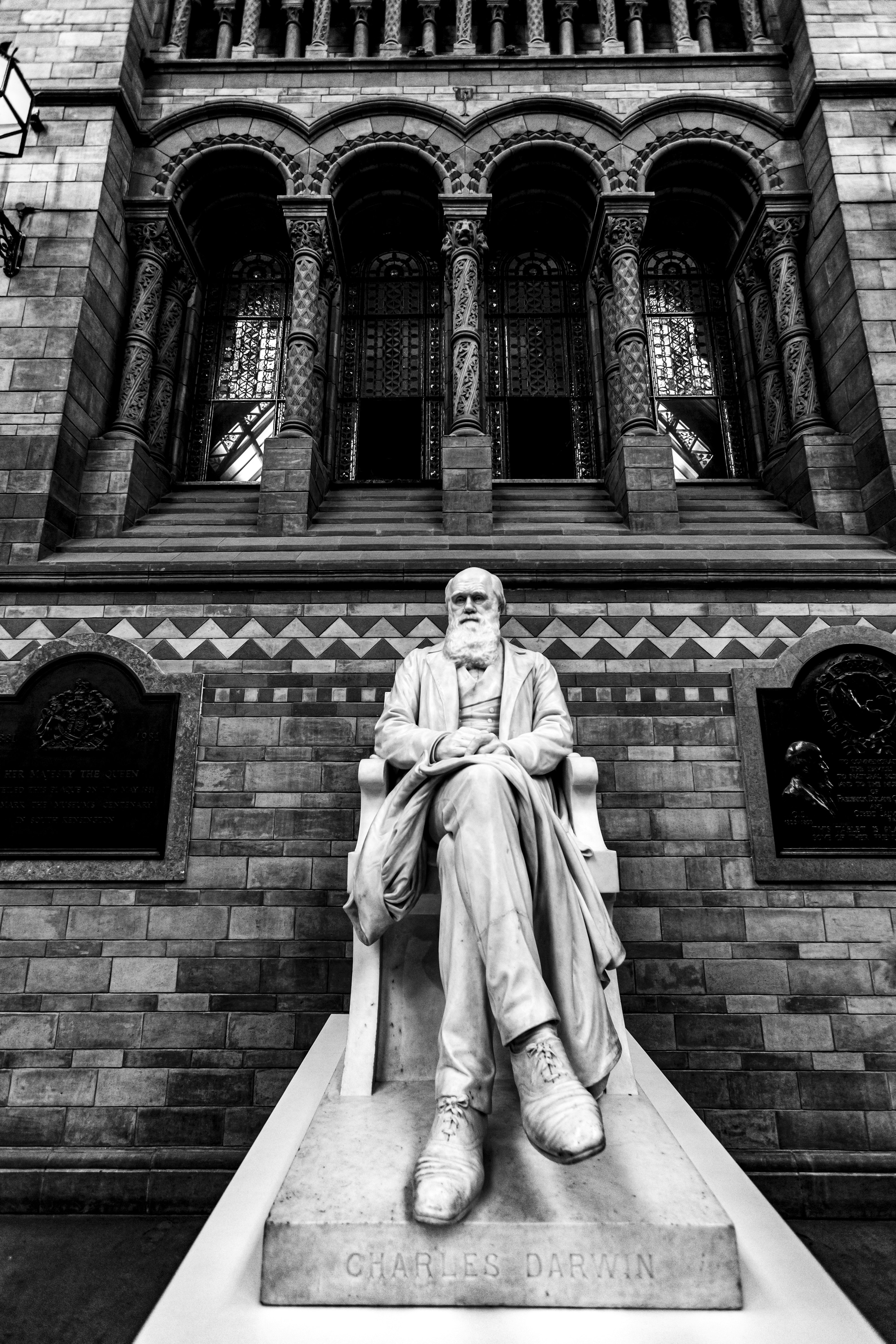
Twenty years after The God Delusion, Richard Dawkins has not mellowed, and he wants you to know it. In a new anniversary essay with The Telegraph, he revisits the book that turned him into the public face of what critics called the New Atheism. He denies there was ever a coordinated “project” with Sam Harris, Daniel Dennett and Christopher Hitchens. But he laments that the old arguments still need restating in 2026. And he closes with a defiant line: “Twenty years on, I stand by what I wrote.”
The essay covers familiar ground. Darwin, he argues, killed the biological argument from design. The cosmological version, built on the fine-tuning of physical constants, will “in due course yield.” A designing God would be even more improbable than the universe he explains. And while Dawkins happily calls himself a “cultural Christian,” he insists that knowing the hymns is not the same as believing the creed.
Christian readers can learn a good deal from this piece, both where Dawkins misfires and where he lands a fair blow. Here are five takeaways.
1. Faith doesn’t need a protective cocoon
Dawkins quotes Douglas Adams, who complained that religion is the one idea “you’re not allowed to say anything bad about.” Christians should take that charge seriously. A faith that claims to be true can afford to be questioned. Peter urged believers to “give an answer” for their hope, “with gentleness and respect” (1 Peter 3:15). That posture works better than offense. When Dawkins jokes about Our Lady of Fatima, the best response is a calm argument, not a wounded complaint about tone.
2. Dawkins is right about the “God of the gaps”
Dawkins rightly mocks the reasoning “I don’t understand the laws of physics, therefore God did it.” Many Christians agree. Dietrich Bonhoeffer warned against using God as a stopgap for incomplete knowledge, since each scientific advance then pushes God further out. The historic Christian claim is bigger: God is not one cause among many, hiding in the unexplained corners. He is the reason there is anything to explain at all. Christians who lean on fine-tuning should present it as a pointer, not a proof, and never as a substitute for that larger vision.
3. Know your own tradition on divine simplicity
Dawkins’s central argument is that a God able to set the cosmic dials must be at least as improbable as the dials themselves. When critics reply that classical theology calls God “simple,” he laughs it off: how can a God who hears a billion prayers be simple?
But he is answering a claim theologians did not make. For Thomas Aquinas and the classical tradition, simplicity does not mean “low in information.” It means God is not assembled from parts, and so is not the kind of thing that needs a designer. Thoughtful philosophers still debate whether this doctrine holds together, and Christian readers should know that. They should also know it well enough to explain it, because it is the hinge on which Dawkins’s whole case turns.
4. The suffering in nature is a real question
Dawkins asks whose side God is on when cheetahs chase gazelles. He points to the waste and cruelty of natural selection, which troubled Darwin himself. Christians should not wave this away. Scripture doesn’t. Paul describes a creation “groaning” and “subjected to frustration” while it waits for redemption (Romans 8:20–22). The Psalms are full of lament. Christian faith does not claim that nature, as it is, displays God’s goodness plainly. It claims that God entered the suffering himself, on a cross, and promises to make all things new. That is a harder, more honest answer than pretending the problem isn’t there.
5. On what makes a Christian, Dawkins agrees with the creeds
The most striking passage may be Dawkins’s account of his “cultural Christianity.” He was baptized and confirmed, knows his hymns by ear, and treasures the King James Bible. Yet he insists this does not make him a Christian, because Christians believe that Jesus died for our sins and rose again.
He is exactly right. Paul said the same: “If Christ has not been raised, your faith is futile” (1 Corinthians 15:17). In a culture where faith is often reduced to heritage or good manners, Dawkins sees clearly that Christianity stands or falls on a historical claim. Christians should welcome that clarity and make the case for the resurrection directly.
The conversation continues
Dawkins ends by saying that a designed universe would be “the most exciting hypothesis in the entire history of science.” On that, at least, Christians can meet him. The question of God matters, and evidence matters. Twenty years on, the best response to The God Delusion is neither outrage nor retreat, but confident, charitable engagement.

