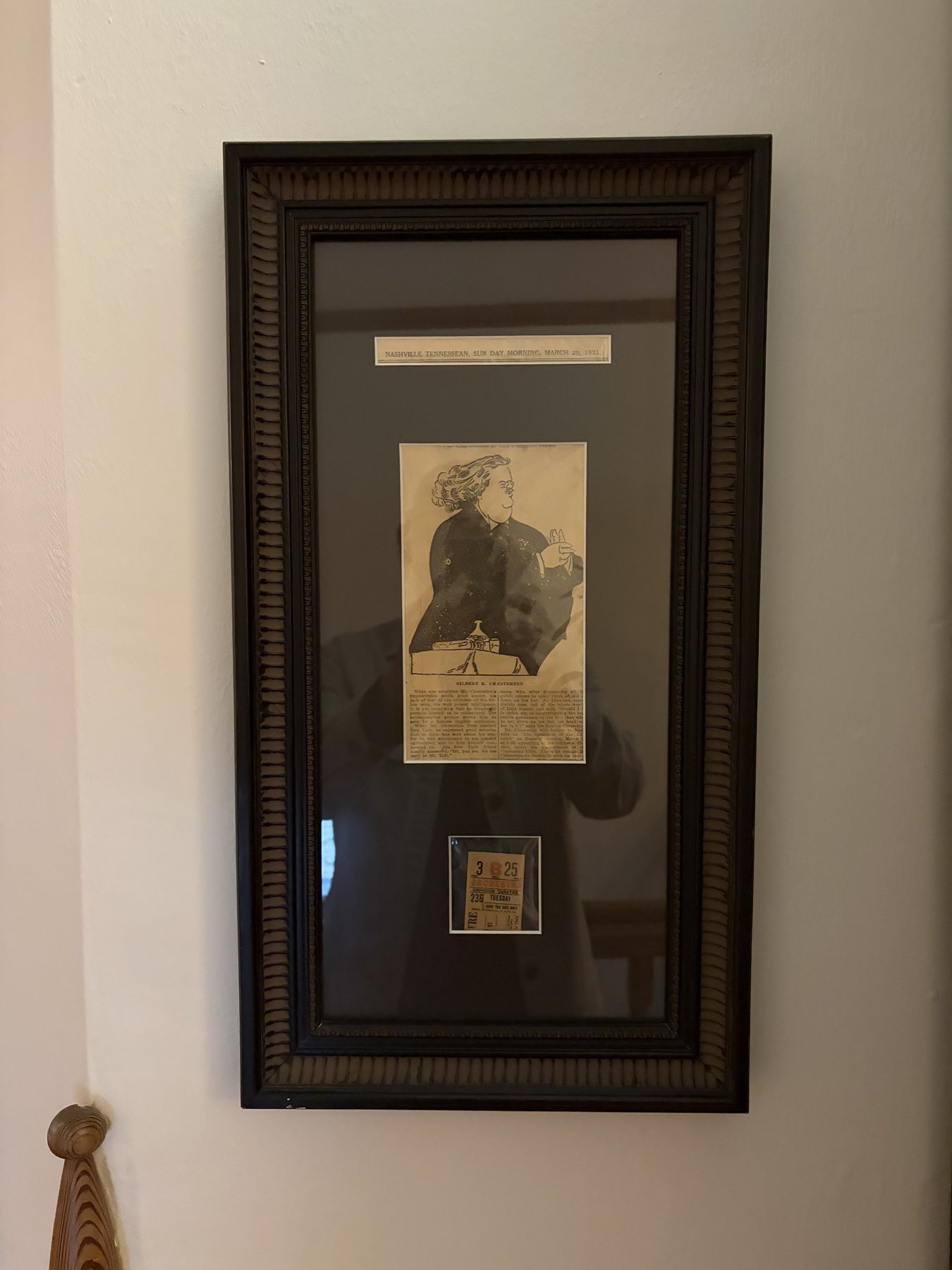
A newspaper clipping, a third-row ticket, and a book signed and dated on the night of the lecture. In March 1921, someone in Nashville read about G.K. Chesterton in the Sunday paper, went to hear him speak, and got his newest book signed. Then they tucked the clipping and the ticket into the back of the book, where all three stayed together for more than a hundred years.
Some collectible books come with a story. This one comes with the evidence. The clipping and the ticket were found wrapped in plastic in the back of this signed copy of The Uses of Diversity. Together they show one person’s evening, from the newspaper announcement to the seat in the theater to the signature on the endpaper. They are offered here together by silent bid.
The Big Man Comes to America
In January 1921, Gilbert Keith Chesterton stepped off a ship in New York for his first American lecture tour. He was the most quoted writer in England: novelist, poet, journalist, the creator of Father Brown, and the author of Orthodoxy. He was also very large, and he knew it. Over about four months he crossed the country, visiting around thirty cities and speaking to sold-out halls from Chicago to Oklahoma City. Then he went home and wrote What I Saw in America (1922).
Nashville was one of those cities, and he didn’t forget it. In What I Saw in America he describes it as quieter and more unhurried than the industrial North. In his hotel room a faded portrait of Andrew Jackson looked down at him, and he used it as a starting point for thinking about Jackson and the American bank wars. He also named Nashville among the American cities with living roots in an older tradition, places where people were as proud of an old building as anyone in an English cathedral town.
“Oh, You See, We Are Used to Mr. Taft”
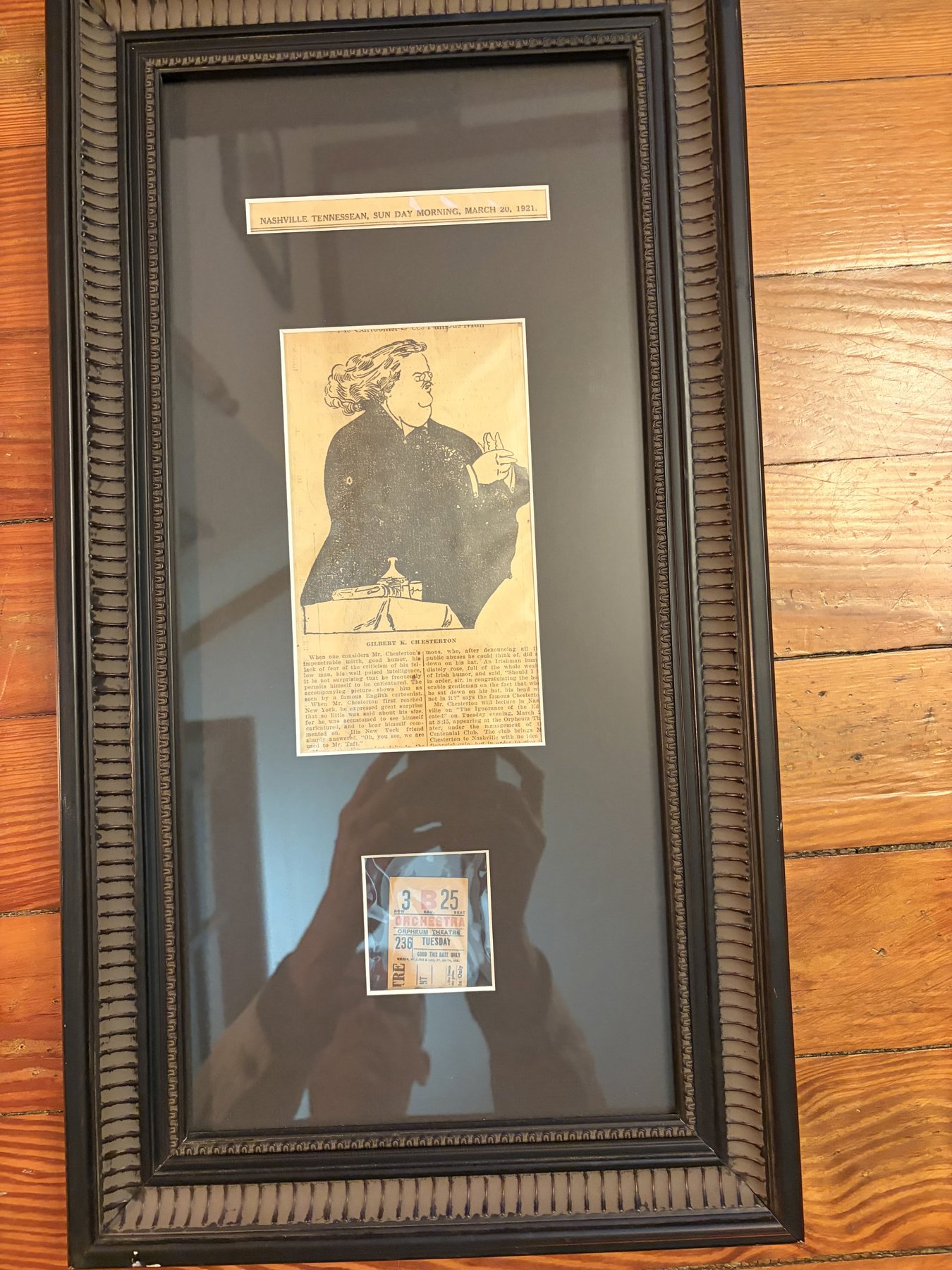
On Sunday morning, March 20, 1921, the Nashville Tennessean announced his visit with a wonderful caricature. It shows Chesterton as “a famous English cartoonist” saw him: a big black-coated figure with a flying mane of hair, a pince-nez and a pleased little smile, gesturing over a lectern.
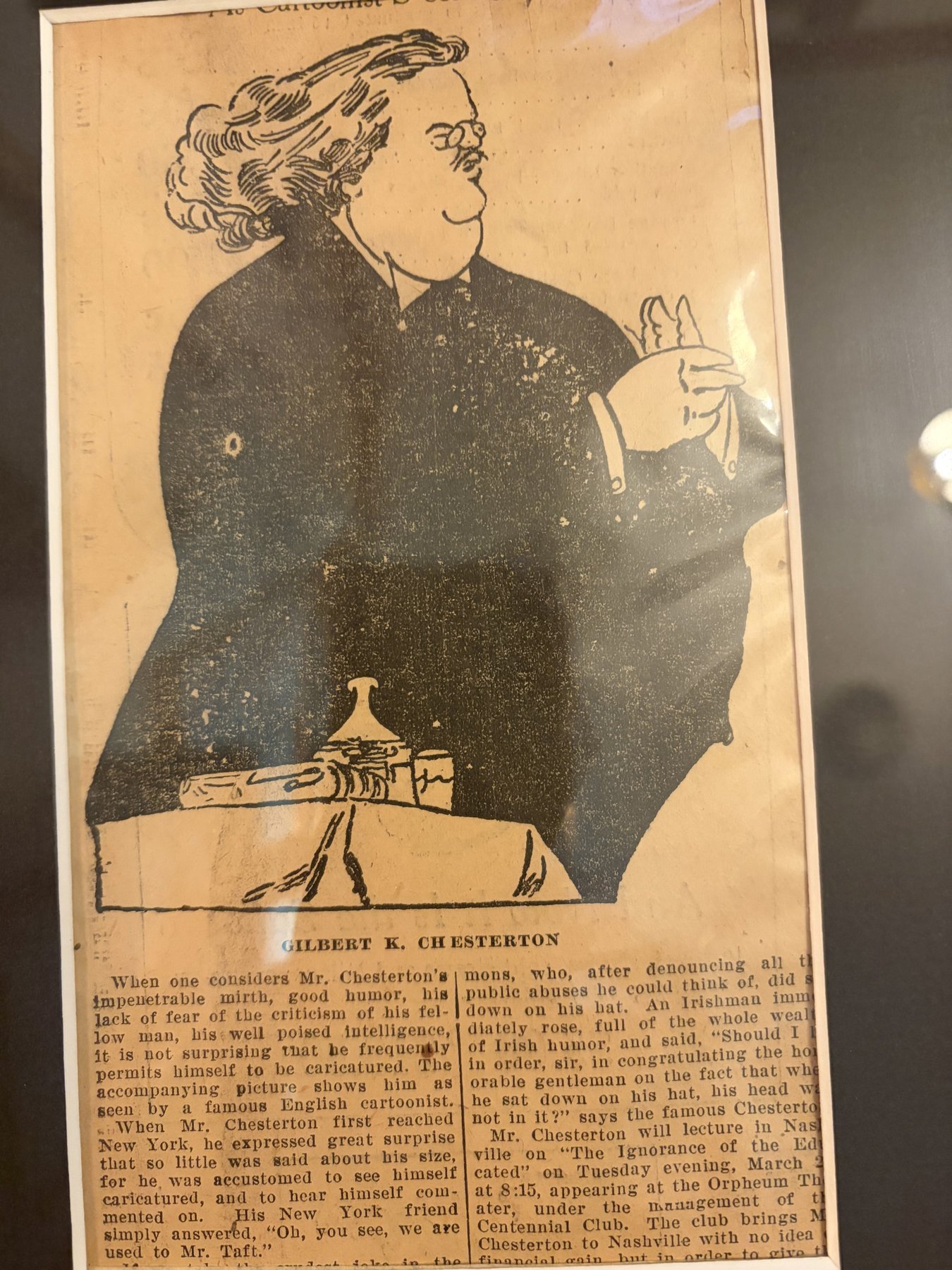
The article is a delight. It praises his “impenetrable mirth” and says he was surprised when he reached New York that hardly anyone mentioned his size. In England he was used to being caricatured for it. His New York friend explained that Americans were already used to Mr. Taft, the former president who was famously the largest man ever to hold the office. The article also tells the old story of the Irishman in Parliament and the hat (you’ll have to read the clipping).
Then comes the announcement. Chesterton would lecture on “The Ignorance of the Educated” at 8:15 on Tuesday evening at the Orpheum Theatre, presented by the Centennial Club. The paper adds that the club brought him to Nashville “with no idea of financial gain.”
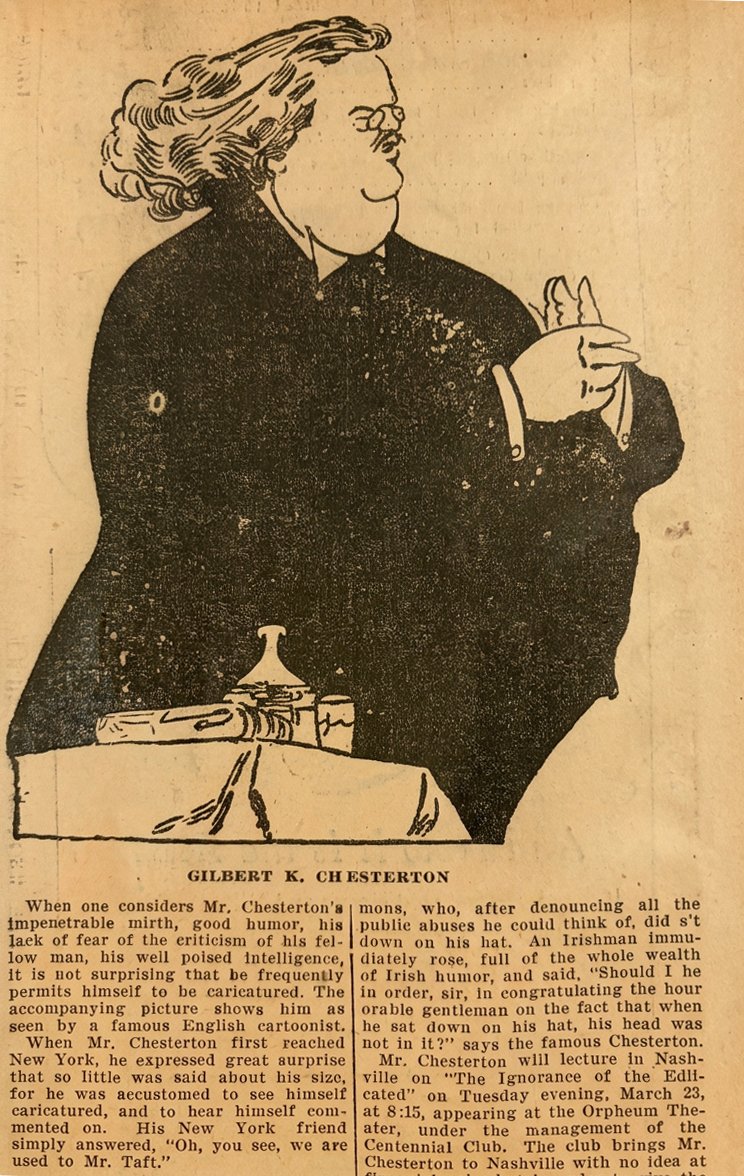
There’s a small twist here. The article gives the date as March 23, but Tuesday in 1921 was March 22. The ticket just says “Tuesday.” And Chesterton’s own handwriting in the book says March 22, 1921. The newspaper got it wrong, and the signature puts it right.
A Women’s Club and a Lost Theatre
The Centennial Club was founded in 1905 by women who had run the Women’s Building at the 1897 Tennessee Centennial Exposition. It was the first women’s civic club in Tennessee. Its members worked on parks, playgrounds, public health and sanitation, and they brought culture to the city. Over the years the club brought Robert Frost, Edna St. Vincent Millay and Amelia Earhart to Nashville. In 1921 it brought Chesterton.
The Orpheum Theatre stood at 208 Seventh Avenue North. It opened in September 1910 as a Keith-circuit vaudeville house and later hosted touring plays and stock companies. In 1938 it was torn down and the site became a parking lot. So this ticket is a relic of a building that no longer exists.
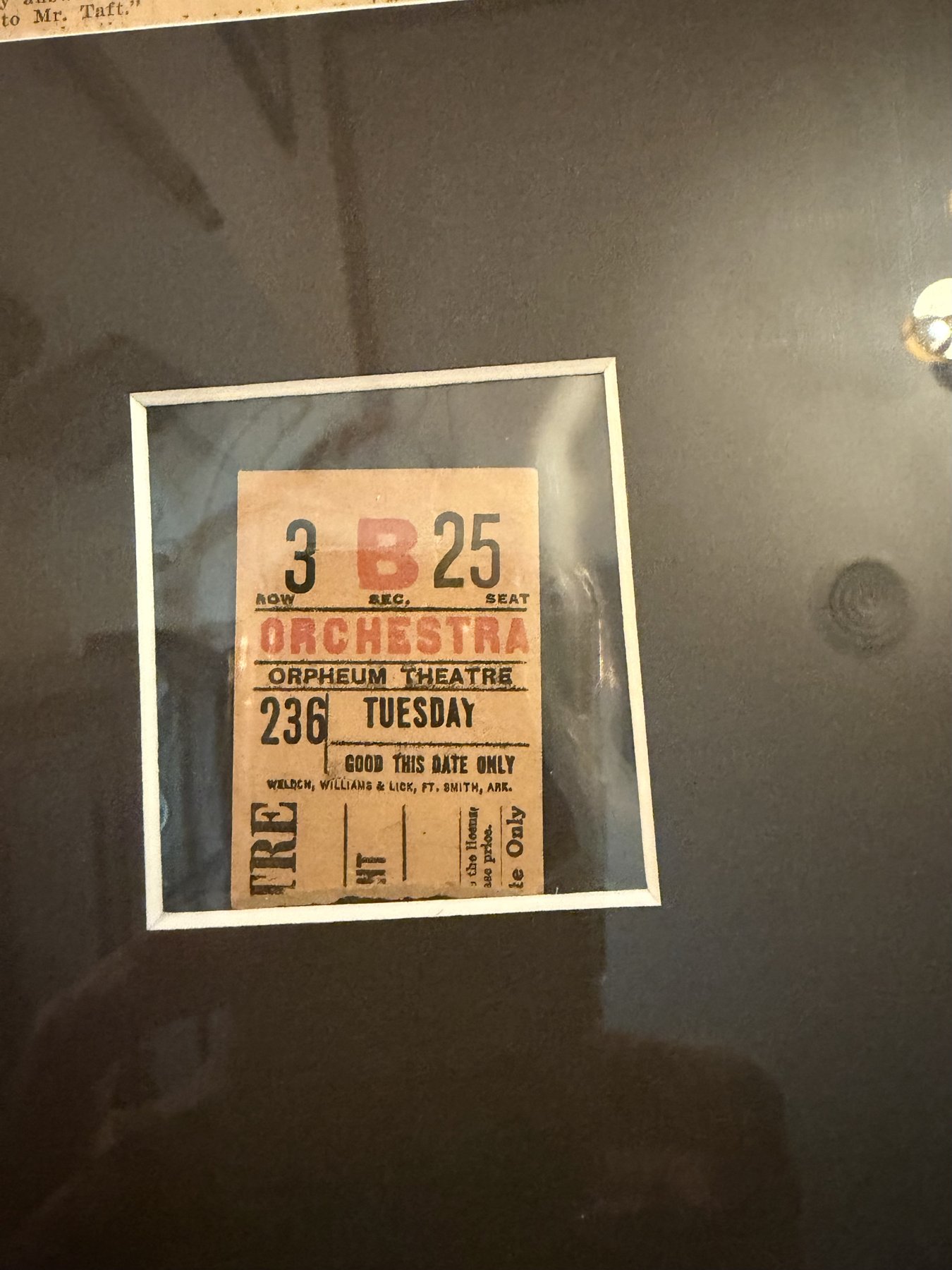
The Ticket: Row 3, Seat 25
The ticket is a lovely object in itself:
- Row 3, Section B, Seat 25, Orchestra, so whoever held it sat close enough to see the pince-nez.
- Orpheum Theatre, No. 236, Tuesday, “Good This Date Only.”
- Printed by Weldon, Williams & Lick of Fort Smith, Arkansas, one of the great American ticket printers.
- The stub is torn along the left edge, just as an usher would have torn it at the door.
The Book: The Uses of Diversity, Signed and Dated
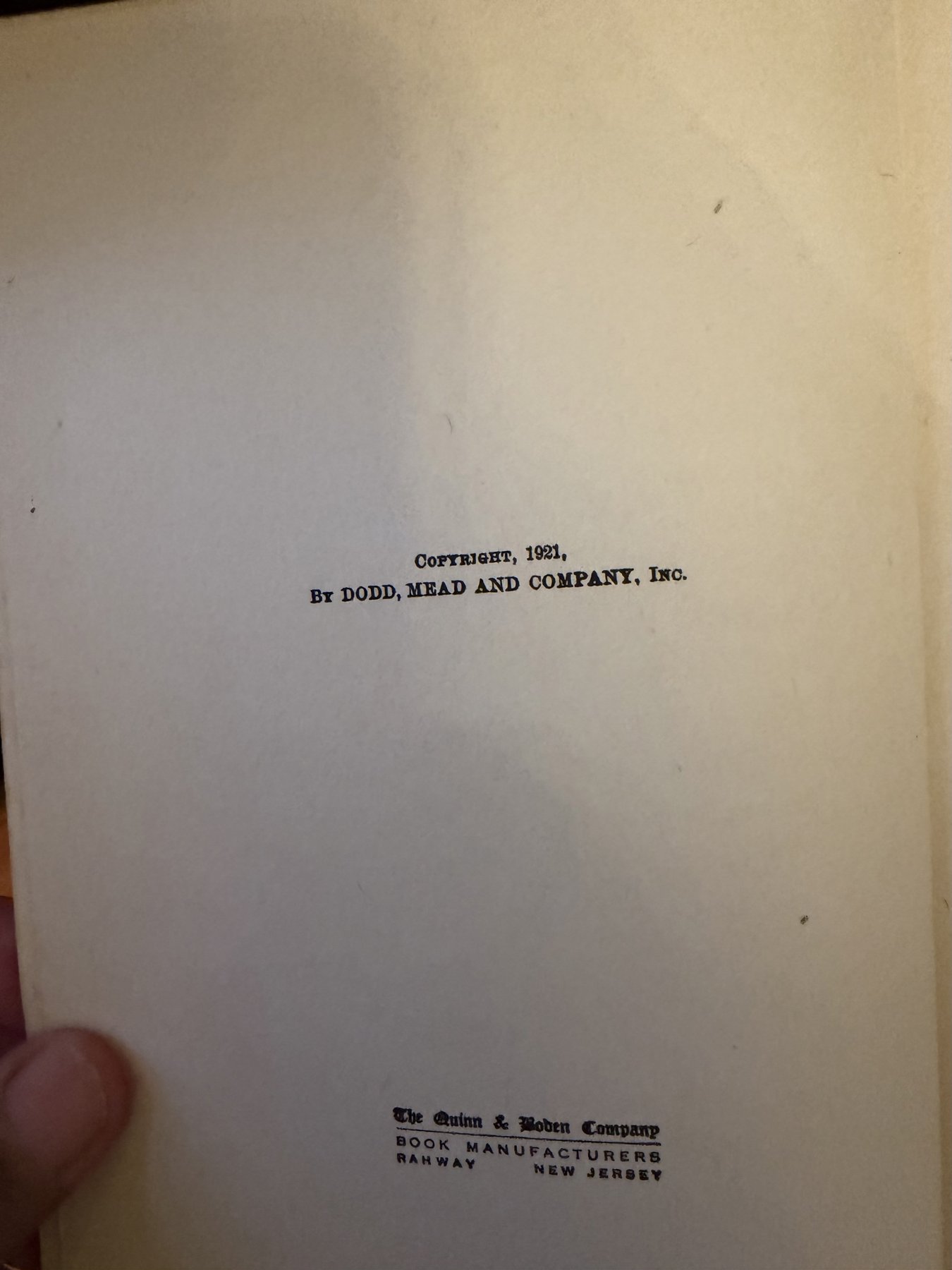
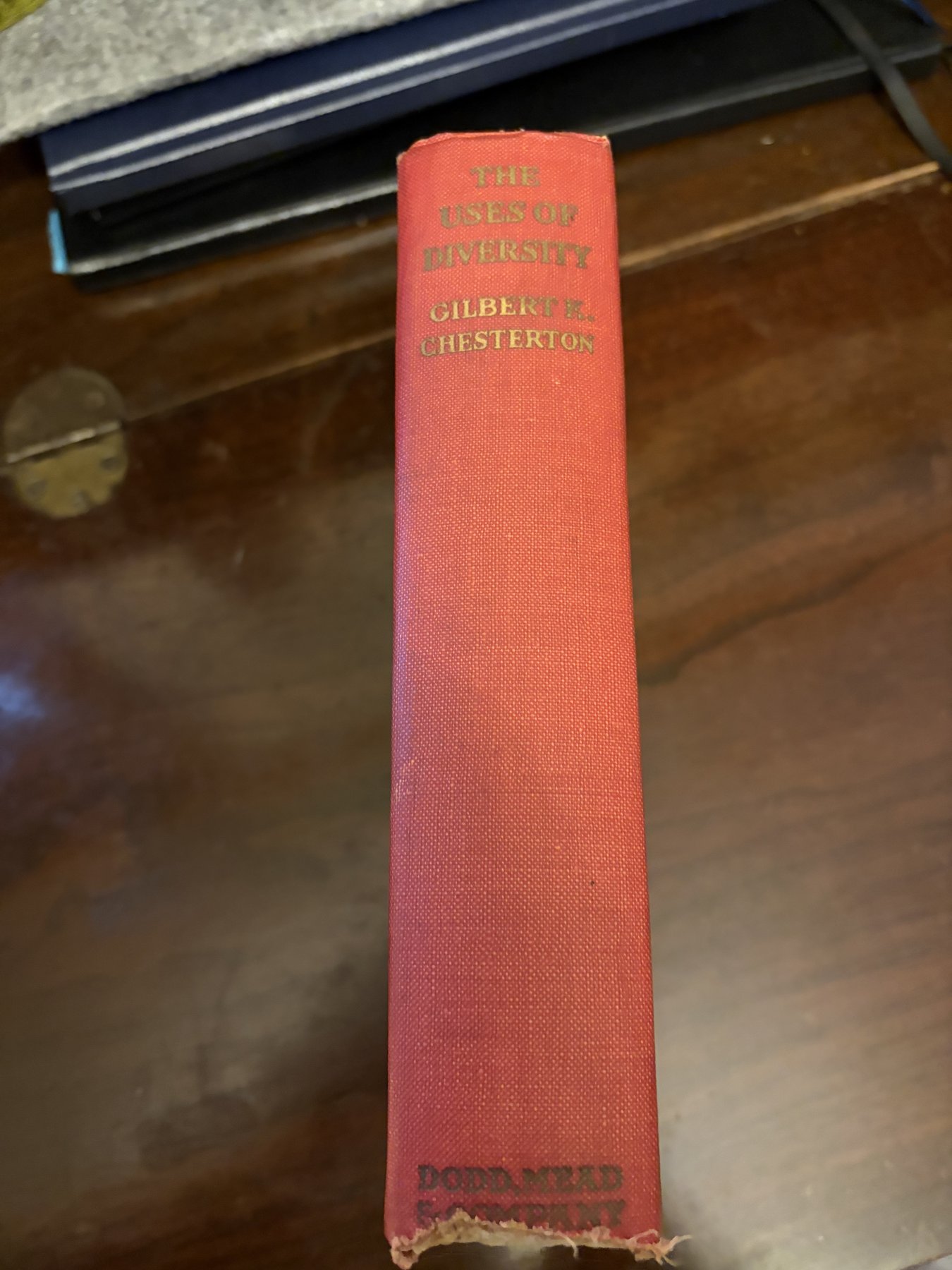
The Uses of Diversity: A Book of Essays first came out in London from Methuen in 1920. This is the first American edition, published in New York by Dodd, Mead and Company in 1921 and printed by the Quinn & Boden Company of Rahway, New Jersey. It was Chesterton’s new book in America, the one on sale in the spring he toured.
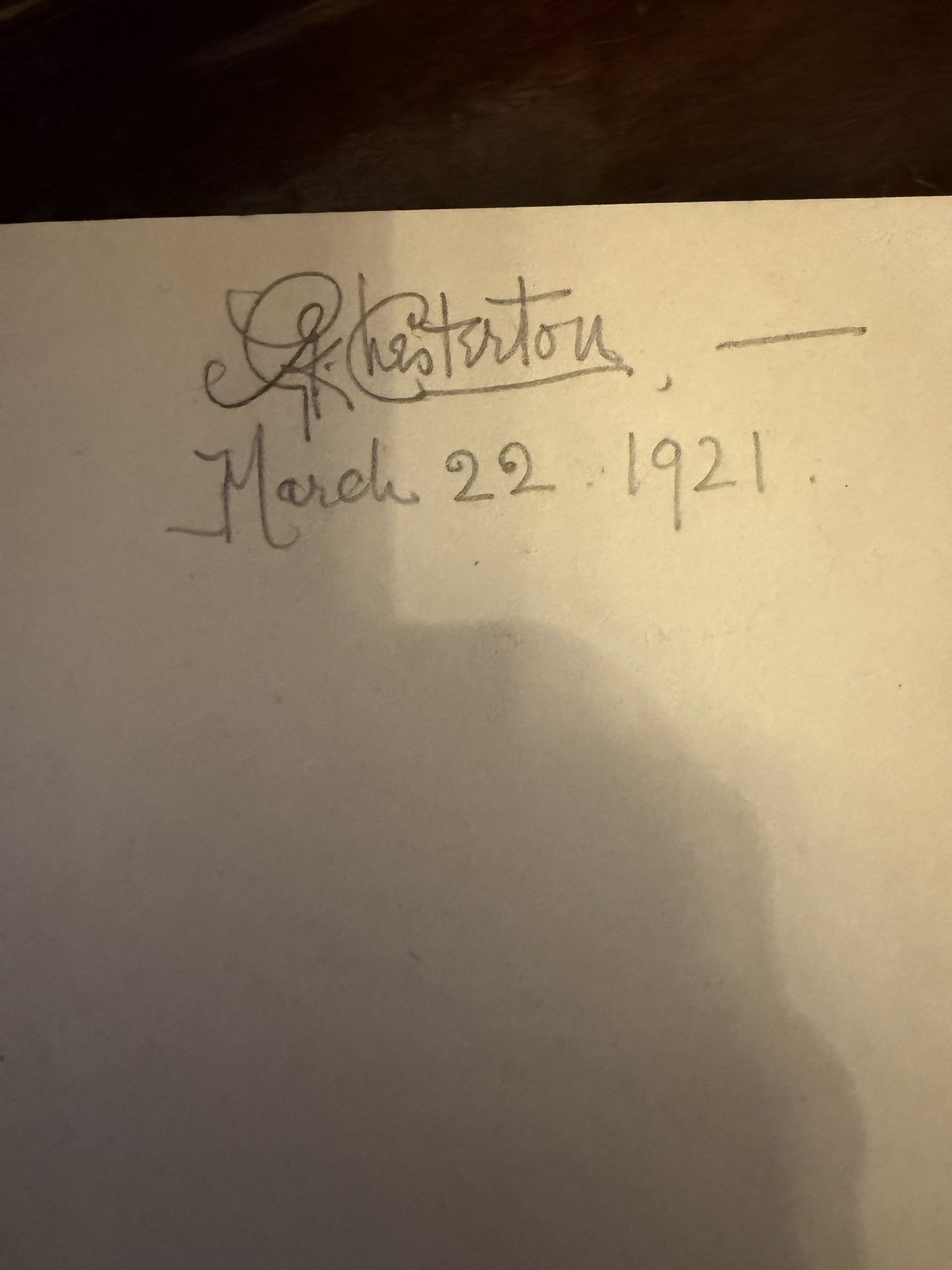
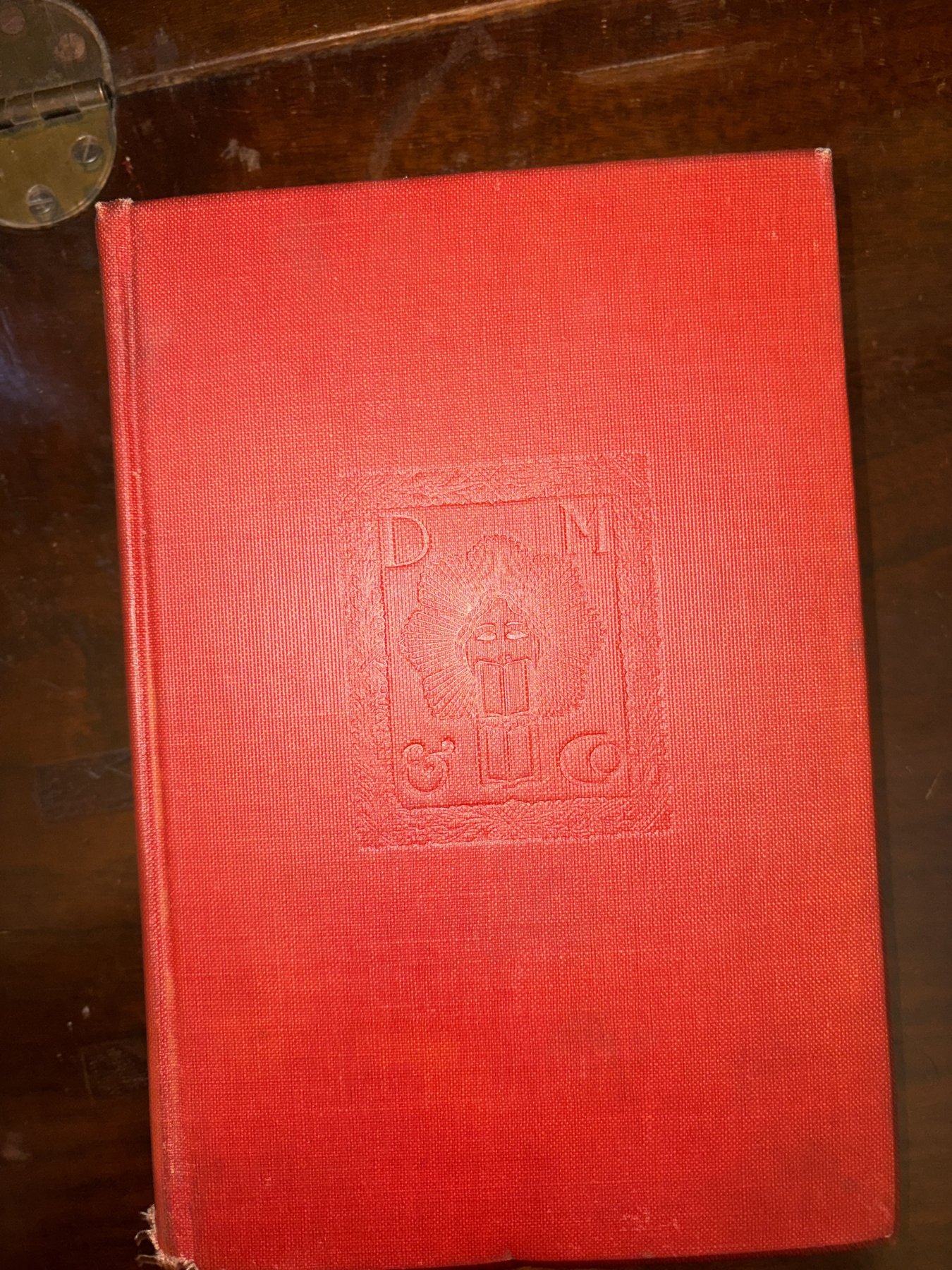
It’s bound in red cloth with the Dodd, Mead device blind-stamped on the front cover and the title in gilt on the spine. It’s signed “G.K. Chesterton” and dated “March 22 1921” on the front free endpaper, in his own looping hand.
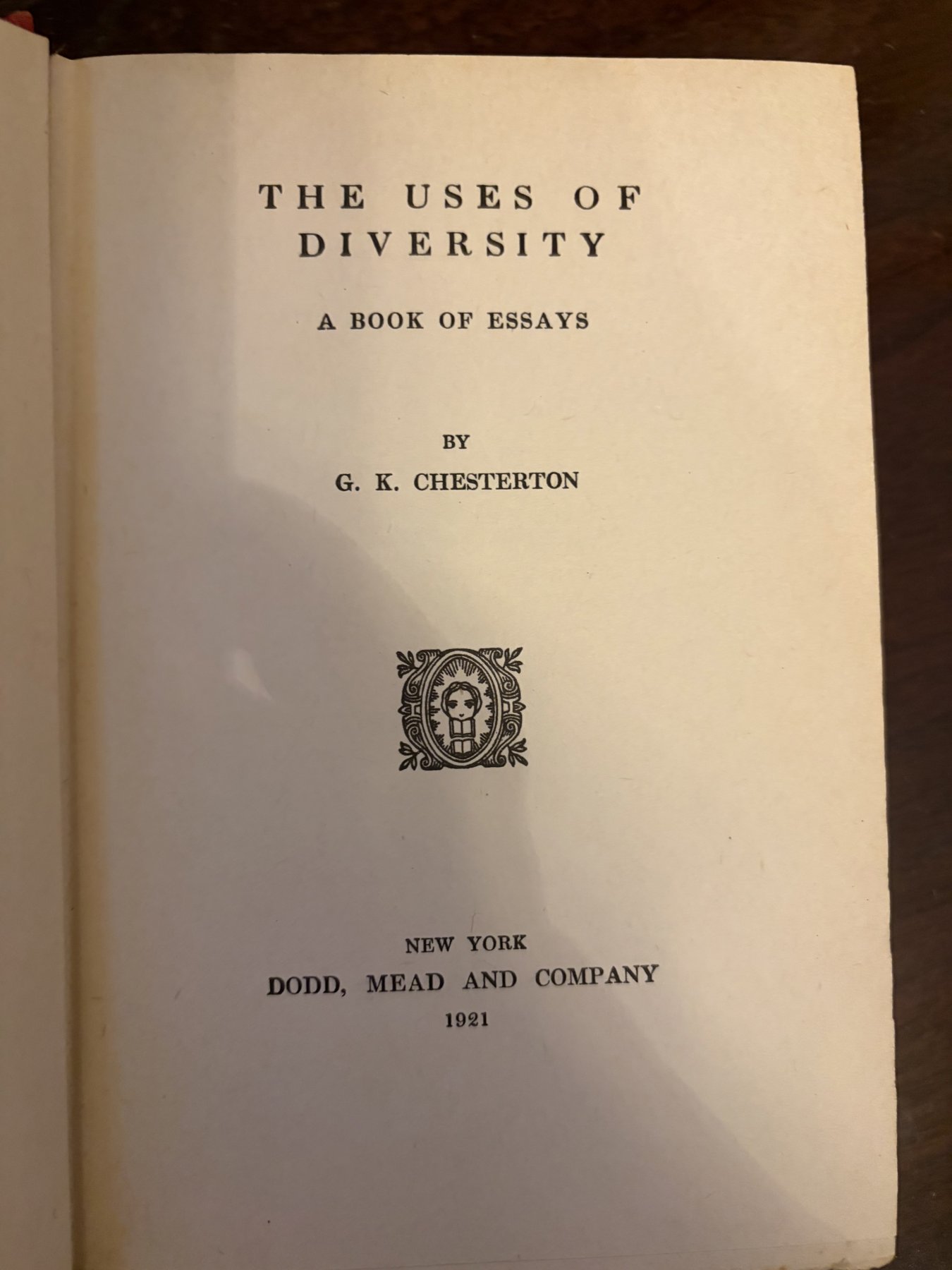
The essays are classic Chesterton: “Lamp-Posts,” “On Pigs as Pets,” “The Domesticity of Detectives,” “The Humour of King Herod,” “Dickens Again,” “On Monsters,” and “The Irishman,” a nice match for the Irishman in the newspaper story. These are the short, sparkling newspaper essays that made him famous.
Readers of this blog will know why such a volume matters. In 1918, a young C.S. Lewis was in a hospital recovering from trench fever when he picked up a volume of Chesterton’s essays. He had never heard of the man, and in Surprised by Joy he tells how Chesterton won him over at once. Years later, Chesterton’s The Everlasting Man helped bring Lewis to faith. A book of Chesterton essays was where that road began.
What’s Included
- The Uses of Diversity (Dodd, Mead, 1921), first American edition, signed and dated by G.K. Chesterton on March 22, 1921, the night of his Nashville lecture
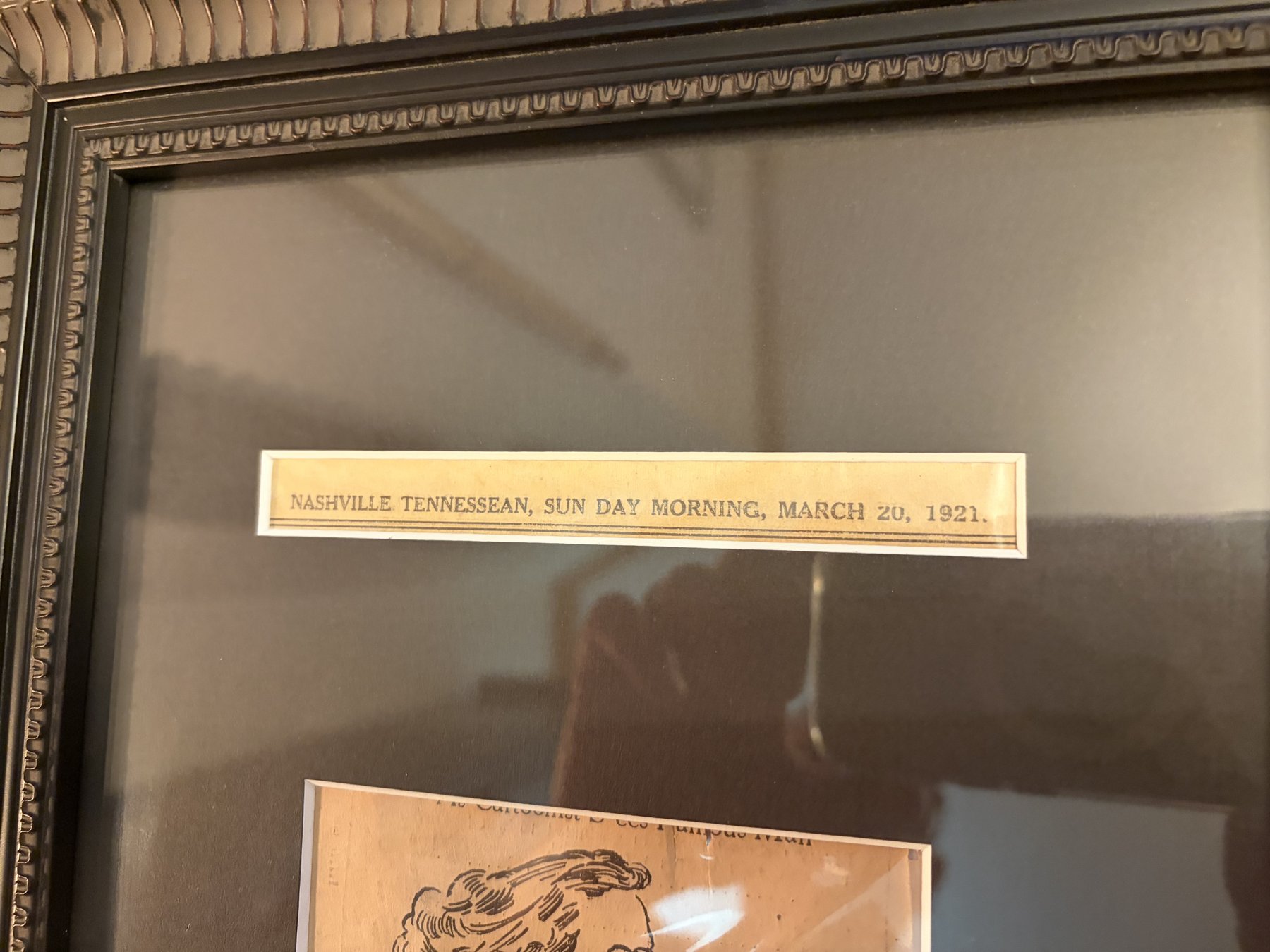
- The original Nashville Tennessean clipping from Sunday, March 20, 1921, with the Chesterton caricature and the lecture announcement, plus the dated masthead strip
- The original Orpheum Theatre ticket (Row 3, Section B, Seat 25) from the lecture
- The clipping and ticket are now in a double-matted, carved dark-wood frame, with the masthead strip at the top, the caricature and article in the center, and the ticket below
- Sold together as one lot
Condition: The book is a hundred-year-old cloth binding and shows its age honestly. It has rubbing and fraying at the head and foot of the spine, softened corners, and some dulling of the spine gilt. The signature is clean and fully legible. The clipping is toned, as newsprint always is, but complete and readable. The ticket is in excellent condition for its age.
Why This Matters
Signed Chesterton books turn up. Signed Chesterton books with a provenance like this almost never do.
Usually an inscription is just a name and a date, and the story behind it is lost. Here you have the announcement that drew the reader in, the ticket that got them through the door, and the signature they came away with, all dated and all from the same city in the same week. Together they tell the story of one evening in March 1921, when Nashville turned out to hear the most famous writer in England talk about “The Ignorance of the Educated.”
I happened upon it at a bookstore in downtown Nashville over a decade ago, Bookman Bookwoman, a beloved independent shop that is sadly now closed. I was happy to find a Chesterton first edition I didn’t have in my collection. You can imagine my surprise when upon further examining the book at home, I found the plastic wrapping, the ticket, and the newspaper clipping. I then thumbed back to the opening pages to find his classic signature along with the date from his speaking engagement. You will probably never get another chance at a set like this.That’s what makes it a little painful to sell, but I know it can have another chapter bringing of joy to someone else.
How to bid
The signed book, the newspaper clipping, and the ticket will be sold together as a single lot by silent bid.
- Email your bid to daniel@theolatte.com with the subject line “Bid: Signed Chesterton Nashville Collection.”
- Include your name, your bid in U.S. dollars, and the best way to reach you.
- If your bid is close to what I’m looking for, I’ll follow up with you personally.
- You can view my ebay seller ratings and my etsy shop ratings/reviews to check on my standard of business. I’ve got good reviews and I want to make sure you are pleased.
- If your bid is accepted, you’ll send your payment through Venmo.
- If requested, and you send an acceptable bid, I can do a video call for you to better inspect your item before sending payment.
- After I receive your payment, I will send the item first class with sufficient insurance to cover the value and send you the tracking number.
Please bid responsibly. I won’t be haggling much over price, so send your best offer the first time. The bid you send is the one I’ll consider. If it is close, I’ll either send a notice of acceptance with directions for next steps, or a counter offer. If you don’t hear back within a few days, feel free to send a higher bid.

