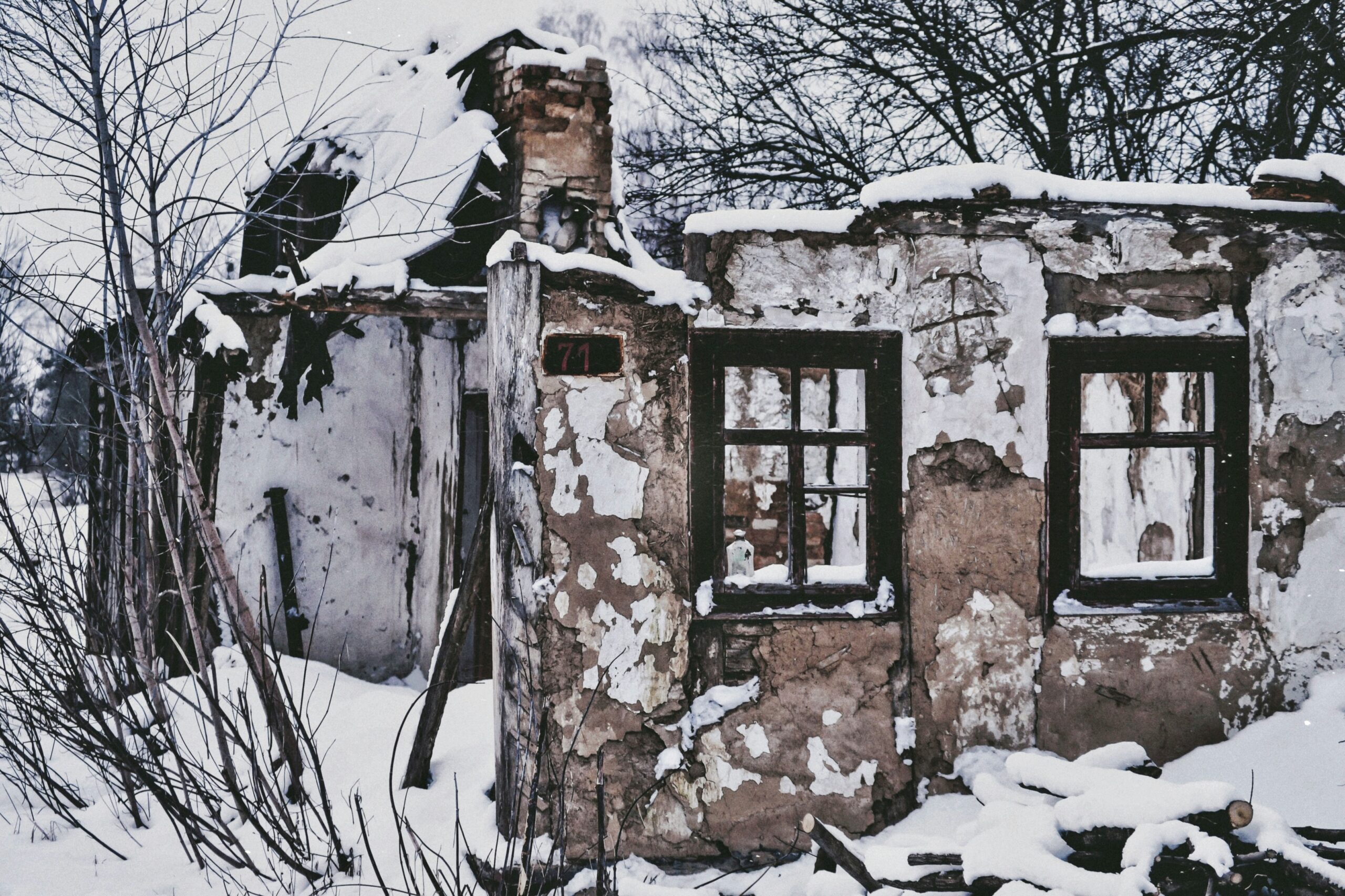
There’s a War at Christmas too. How should we pray? My colleague from Scholar Leaders Taras Dyatlik says we should pray like Daniel. Taras is a continual source of encouragement to me from afar as he shows me what war tested hope and tear stained joy look like. Take a minute to read his reflection and say a prayer for our sisters and brothers in Ukraine.
Guest Post: By Taras Dyatlik from Ukraine
How to pray about Ukraine during the ongoing “peace deal”… Late-night reflections in peaceful Chisinau on the scandal of Daniel’s windows… on praying toward the rubble… Daniel opened his windows toward Jerusalem three times a day. Not toward Babylon of the newly rising Medo-Persian Empire after the fall of the Babylonian one… the city where he lived, worked, and prospered. Not toward the palace, where his career flourished, where power resided, where the empire made its demands…
But toward Jerusalem. Ruined Jerusalem. Distant Jerusalem… The city that existed more in memory and promise than in present reality. Jerusalem, destroyed nearly half a century before Daniel opened his windows… forty-seven years of rubble, forty-seven years of broken walls, forty-seven years of worship spaces reduced to blackened stones and ash… The people remained scattered in exile, displaced from what they called home. Rebuilding had not yet begun… permission would come soon, but not yet. Not yet…
When Daniel prayed, he prayed toward ruins. Not toward what Jerusalem was. Not even toward what Jerusalem would become. Toward what it represented in its devastation… It is the scandal of his orientation… he turned away from the imperial glory toward Jerusalem’s broken walls… toward present devastation… toward hope buried under debris… Some cities matter not because they stand intact, but because of what was destroyed there… and what refuses to be extinguished…
When you pray, your body turns toward what your heart claims as center. Daniel’s body in Babylon, his windows open toward Jerusalem… this was the prophet’s way of saying: “I know where I am. But I also know where I belong.” The empire could command his service, but it could not command his orientation. Darius could make him an advisor, but he could not make Babylon his spiritual home…
The question was never whether Daniel served in Babylon. He did. Faithfully, even. The question was: when he prayed, which direction did he face?
Prayer is not neutral… It positions us. It declares allegiance. When Daniel turned toward Jerusalem to pray, he was making a public theological statement: the center of God’s purposes is not where imperial power currently resides. The rubble of Jerusalem mattered more than the glory of safe Babylon in the newly great again empire. The promise mattered more than the present arrangement…
This is why they came for him. Not because he prayed… Persian and Median administrators and officials under Darius did not care if he prayed. Because he prayed toward the wrong city… Because his prayer refused to reorient toward the center of power and “true faith office” or “traditional values.” Because even in exile, his heart remained stubbornly oriented toward something Babylon could neither offer nor control.
There is probably a reason the text specifies that his windows were open. He could have prayed in secret, toward Jerusalem, with curtains drawn. Safer that way, maybe… But Daniel understood that some prayers must be public precisely because they are controversial. When praying toward Jerusalem becomes illegal, praying toward Jerusalem with windows open becomes a witness…
We live in times when the question of orientation matters again. When prayer is not abstract evangelical spirituality but a concrete positioning. When the direction we face when we intercede reveals our theology more clearly than our systematic statements about “traditional Christian values”…
Some pray toward the palace: toward the leader, the power, the empire, toward Moscow. They petition God to bless what the powerful are doing, to sanctify aggression, to make holy what should never be called holy. Their windows open toward Babylon and the newly rising empire…
Others pray toward the ruins… toward Kyiv, Bucha, Mariupol, Kherson, Pokrovsk, and hundreds of other towns… Toward cities that look more like Jerusalem in times of Daniel than Babylon in its glory. They intercede for the suffering, for the displaced, for those defending what remains. Their orientation is toward the rubble, not the throne…
The empire will always demand reorientation of the “windows of the souls” from Christians who dream of a Christian Christendom, the great again empire, and a strong “leader” with strong “traditional Christian values.” It will insist that wisdom means facing toward where power currently resides. It will suggest that praying toward destroyed cities is impractical, nostalgic, and politically naïve, and not a peace deal… It will point out that Babylon is here, functional, glorious, while Jerusalem is distant, damaged, uncertain, and should surrender…
But Daniel knew something the empire could not teach: the location of current glorious political power is not the location of God’s ultimate purposes.
So the question remains for me: which direction should our windows open when empires offer peace plans that require us to stop praying toward the rubble? When distant advisors suggest that facing toward ruins is impractical (because wisdom means reorienting toward wherever power currently resides, that we should close our “controversial windows” for the sake of pragmatic arrangements), do we listen? When they promise security if we will just turn away from what is being destroyed, away from displaced people, away from debris, and face instead toward the palace, toward the capital of those demanding our reorientation, what then?
Daniel opened his windows. Toward Jerusalem. Three times a day.
Even when it became illegal. Even when the empire insisted that this orientation threatened regional stability. Even when advisors counseled accommodation and complicity. Until they threw him to the lions for it. So, in which direction do our windows open? Toward the rubble or toward the palace? Toward those defending what remains or toward those demanding we call their expansion something other than what it is? Are some orientations worth risking our security, comfort, and lives for? Probably, we should respond individually… The question is whether we still believe that… Peace be with you and keep your children away from war…
Taras D (Chisinau, Moldova)