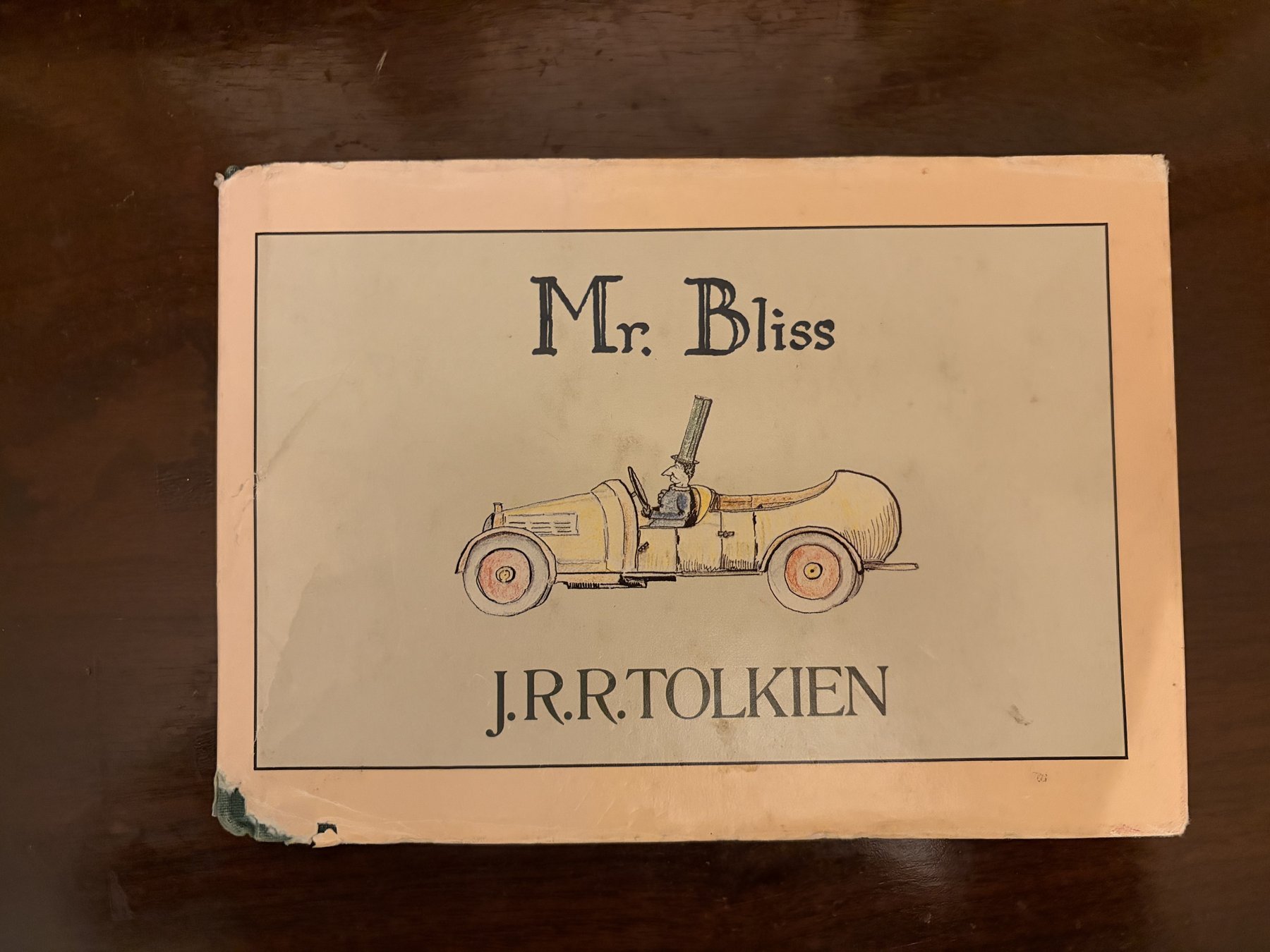
Before Middle-earth made him famous, J.R.R. Tolkien was a father telling stories in a crowded house in North Oxford. Some became The Hobbit. Others stayed smaller: a man in a tall hat crashing a yellow car, a grumpy farmer who stumbles into dragon-slaying, and a village cook’s cake with a fairy star baked into it.
These three books come from those small stories. Two began as tales for his children, and one he wrote near the end of his life looking back. Together they show a side of Tolkien that many readers have never met, and they’re offered here as one lot by silent bid.
Mr. Bliss: A Father, a New Car, and a Lot of Cabbages
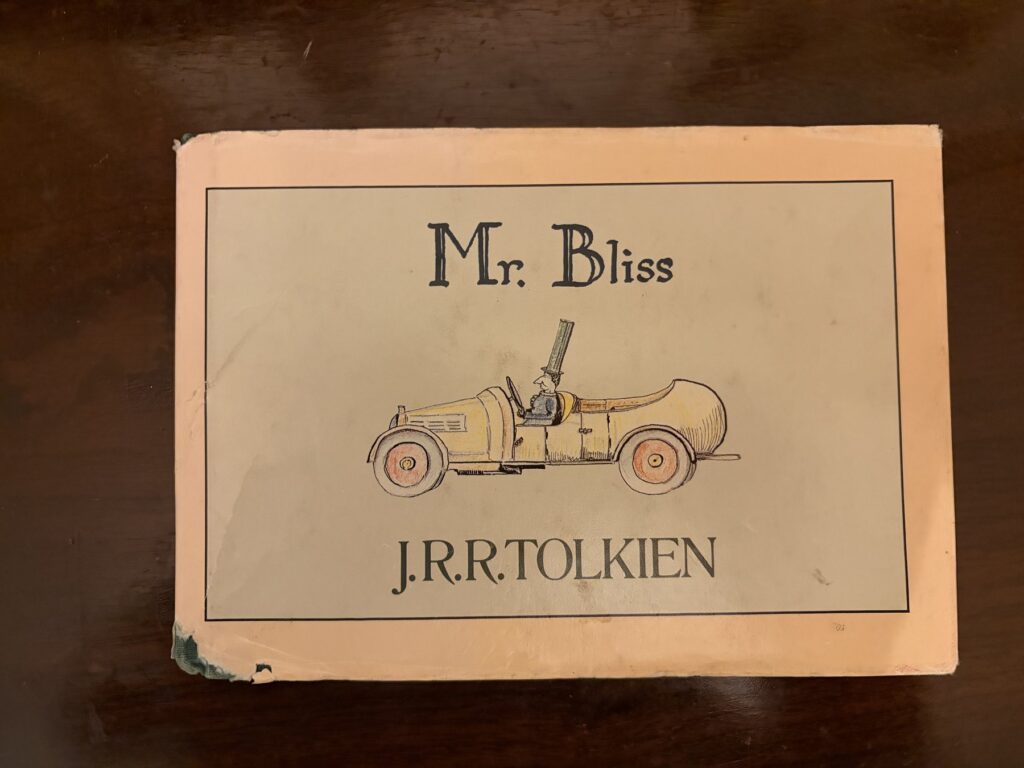
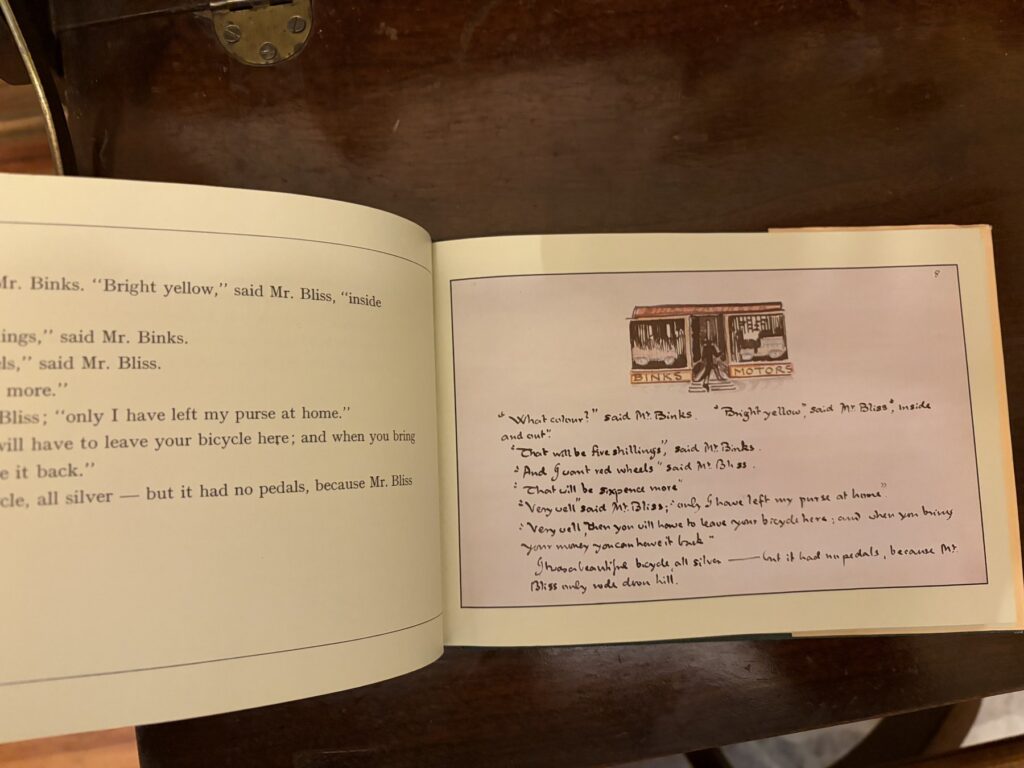
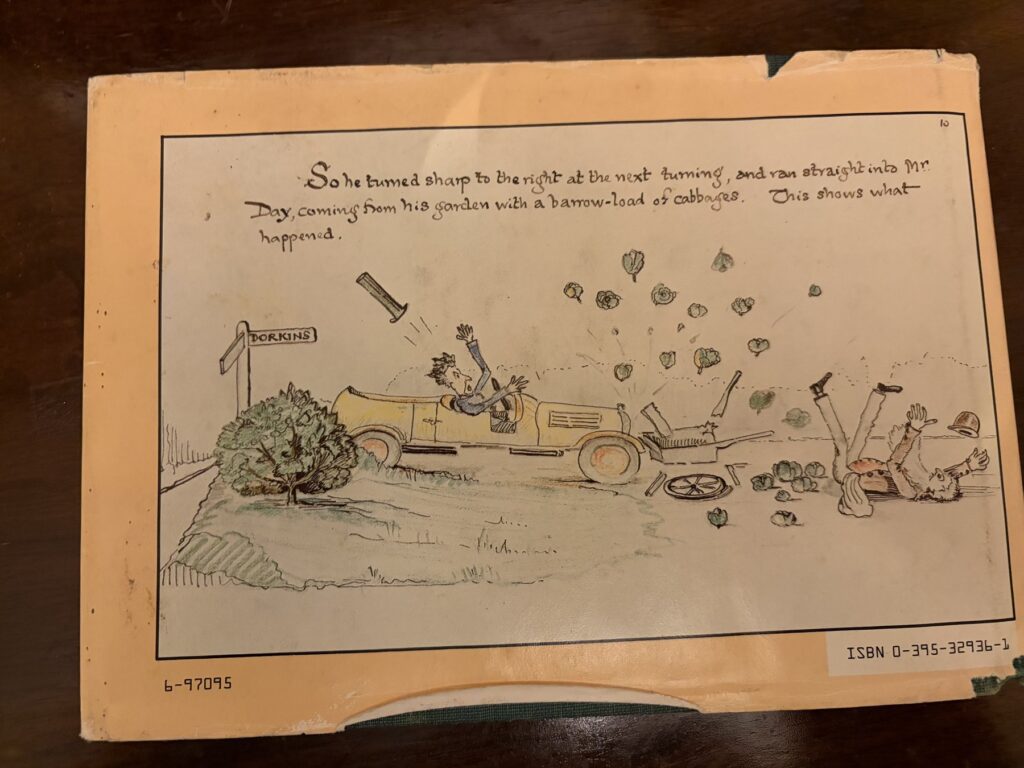
In 1932 Tolkien bought his first car, and by family accounts he was not a careful driver. Out of that came Mr. Bliss, a picture book he wrote and drew himself in ink and colored pencil for his children. Mr. Bliss buys a bright yellow motor car (“inside and out”) with red wheels and then crashes his way across the countryside. He runs into Mr. Day and his barrow of cabbages (shown on the back of this jacket), and he gets tangled up with three bears modeled on his sons’ own teddy bears.
After The Hobbit came out, Tolkien offered the story to his publishers. The color drawings were too expensive to print at the time, and he never got around to redrawing them. In 1957 the manuscript went to Marquette University with his manuscripts of The Hobbit, The Lord of the Rings, and Farmer Giles. It wasn’t published until 1982, nearly a decade after his death.
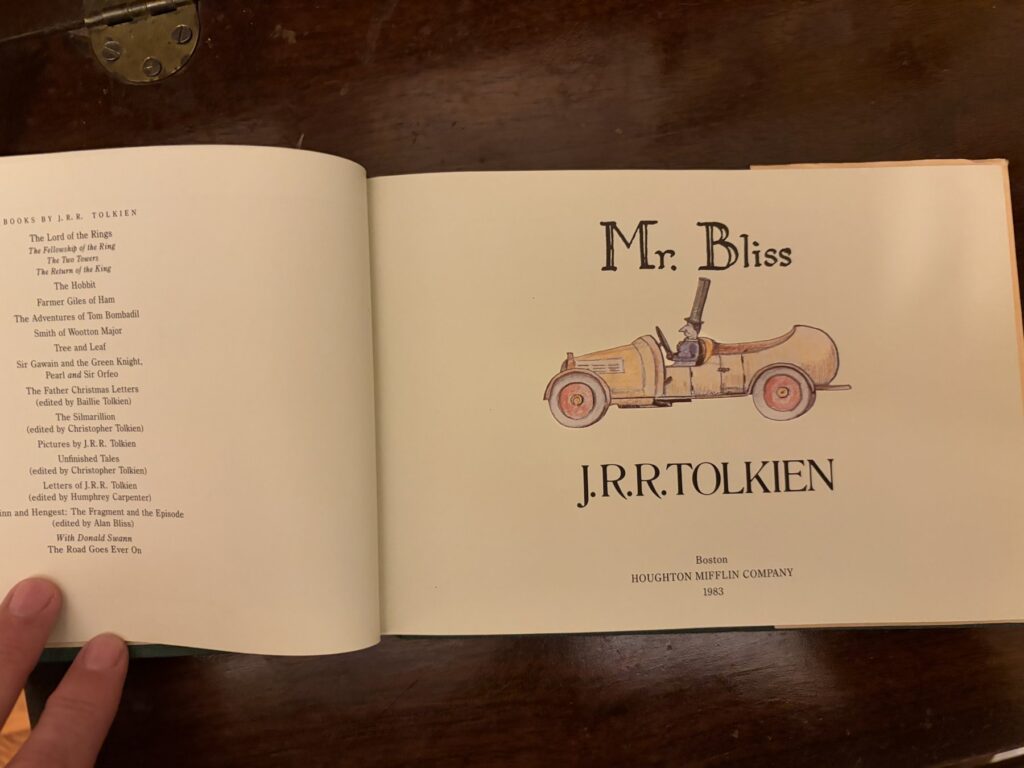
The book reproduces Tolkien’s own pages, in his handwriting and his own colored-pencil drawings, with a typeset transcription facing each one. This copy is the first American edition, Houghton Mifflin, Boston, 1983, in an oblong format with its original dust jacket.
Farmer Giles of Ham: The Dragon Story That Introduced Pauline Baynes
Farmer Giles of Ham began as a story for the Tolkien children. Family tradition says he made it up while the family sheltered from a rainstorm on a picnic. He later expanded it and read it to an undergraduate society at Worcester College, Oxford, in place of a paper. Allen & Unwin published it in 1949.
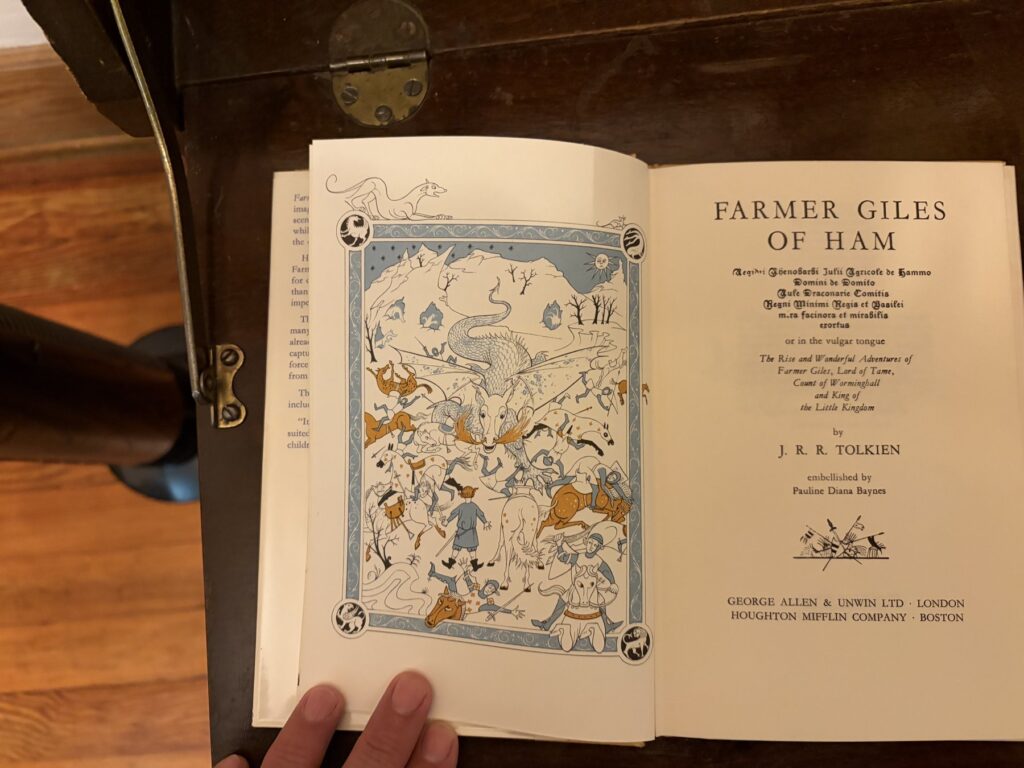
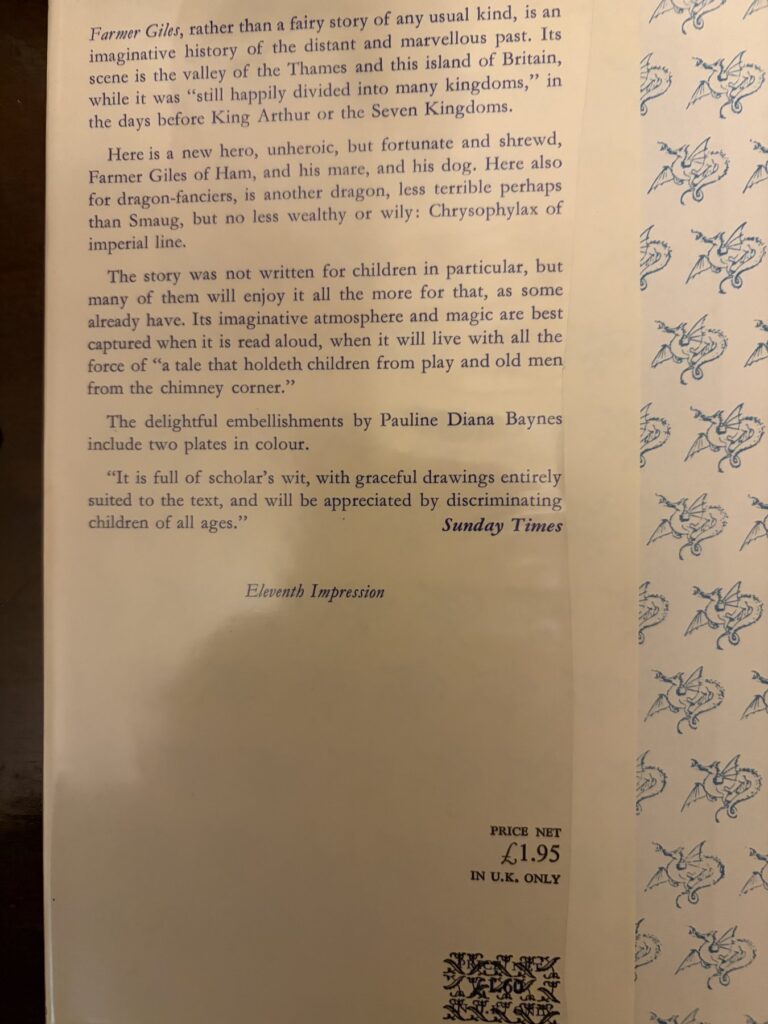
It’s Tolkien at his most playful. The tale is presented as a translation from “very insular Latin,” with a mock-Latin title page to match. Its hero is an unheroic farmer whose blunderbuss scares off a giant, and its dragon is Chrysophylax, who is “less terrible perhaps than Smaug, but no less wealthy or wily.” The landscape is the countryside around Oxford. Giles ends up Lord of Tame (Thame) and Count of Worminghall, both real places a short drive from Tolkien’s college.
Readers of this blog will want to know one more thing. Farmer Giles was the book that introduced Pauline Baynes. Tolkien loved her medieval-manuscript drawings, and soon afterward C.S. Lewis chose her to illustrate The Lion, the Witch and the Wardrobe. She went on to draw all seven Chronicles of Narnia. The Narnia look starts here, in her frontispiece of Giles facing down the dragon.
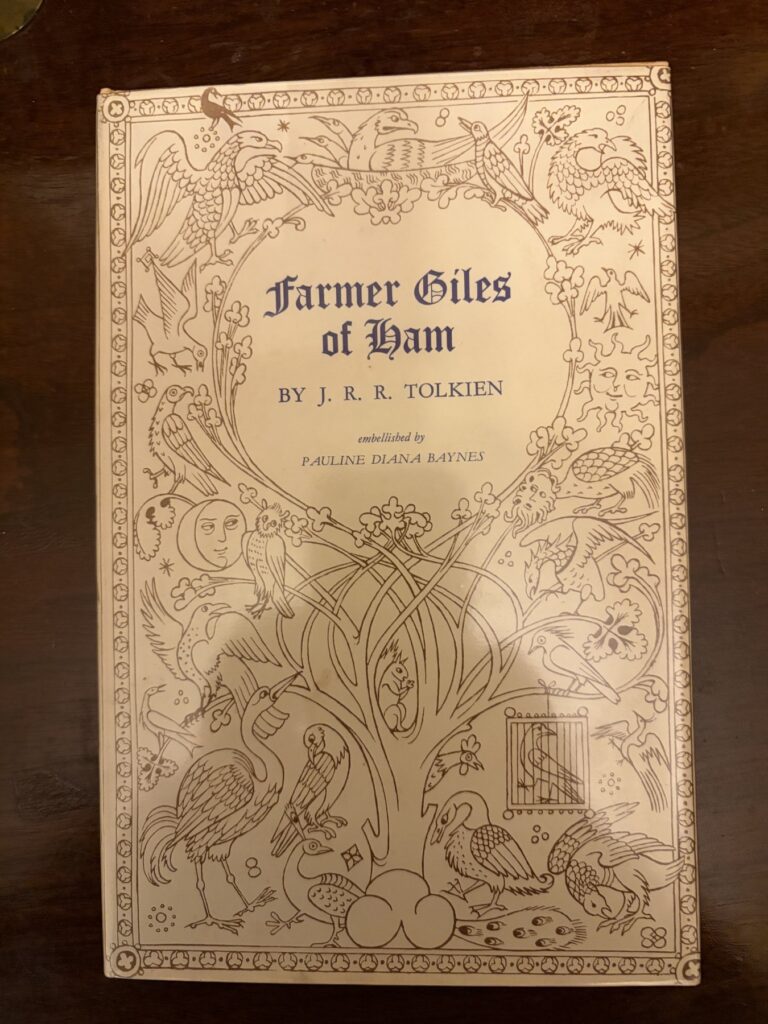
This copy is an Allen & Unwin / Houghton Mifflin printing from the 1970s, the Eleventh Impression. It has Baynes’s bird-and-tree pictorial jacket with the original £1.95 price, her color frontispiece, and the blue dragon pattern on the flap.
Smith of Wootton Major: An Old Man’s Book
The third book belongs here as the other end of the story. Smith of Wootton Major began when Tolkien agreed to write a preface for George MacDonald’s fairy tale The Golden Key. While trying to explain what “Faery” means, he started telling a story about a village cook and a Great Cake, and the story took over. A boy swallows a fairy star hidden in the cake, and it gives him passage into the Perilous Realm. As an old man he has to give the star up for the next child.
Tolkien called it “an old man’s book,” with a presage of bereavement. It was the last major work he published in his lifetime. It reads like a goodbye from a storyteller who knew his own journeys into Faery were nearly over.
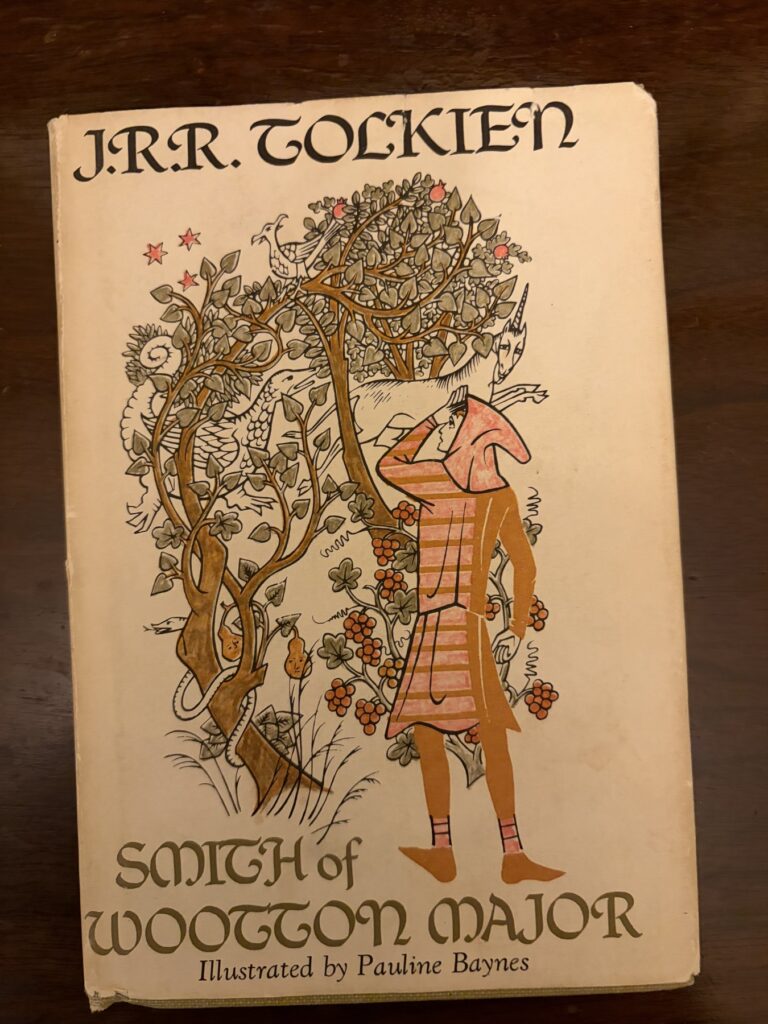
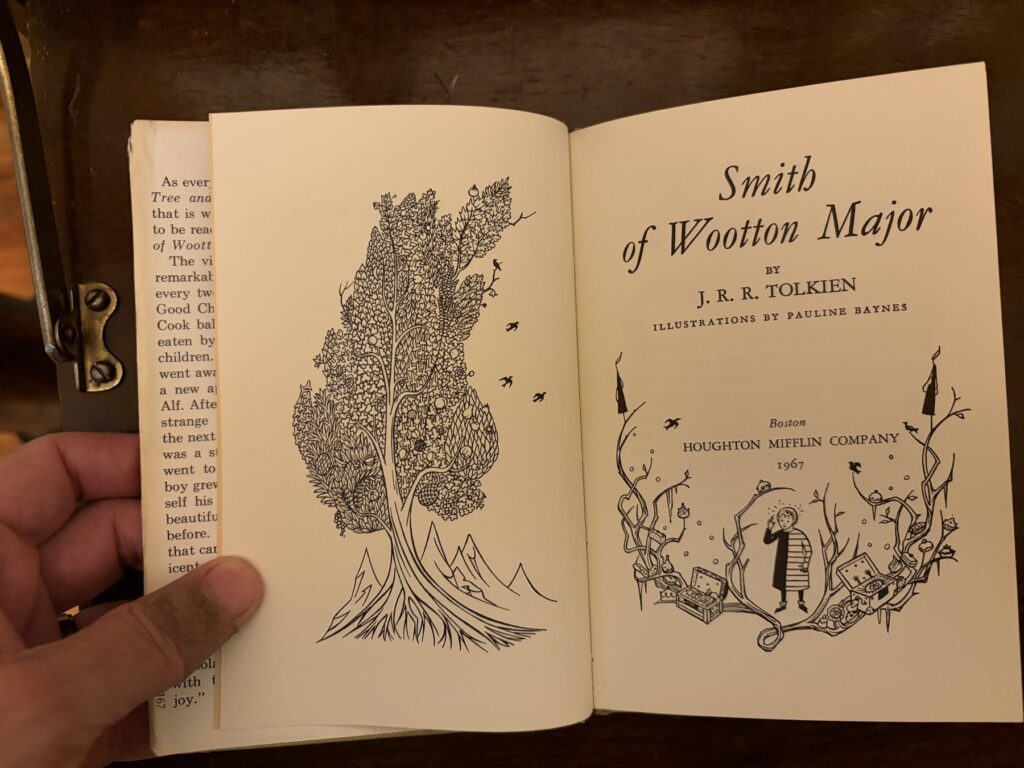
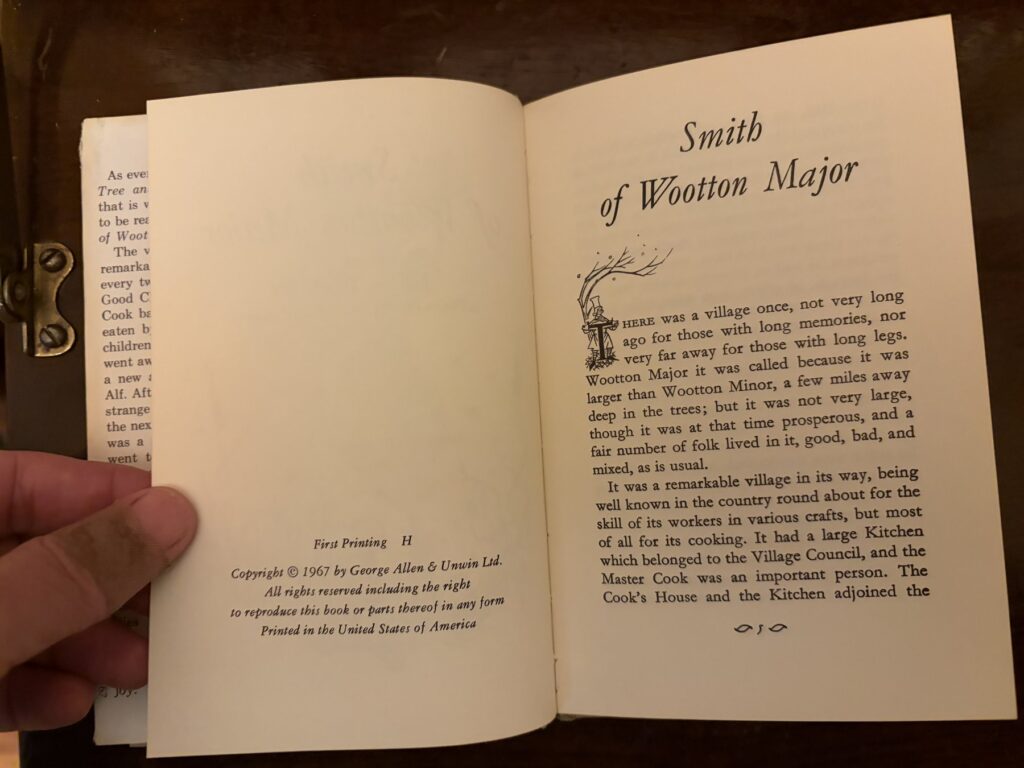
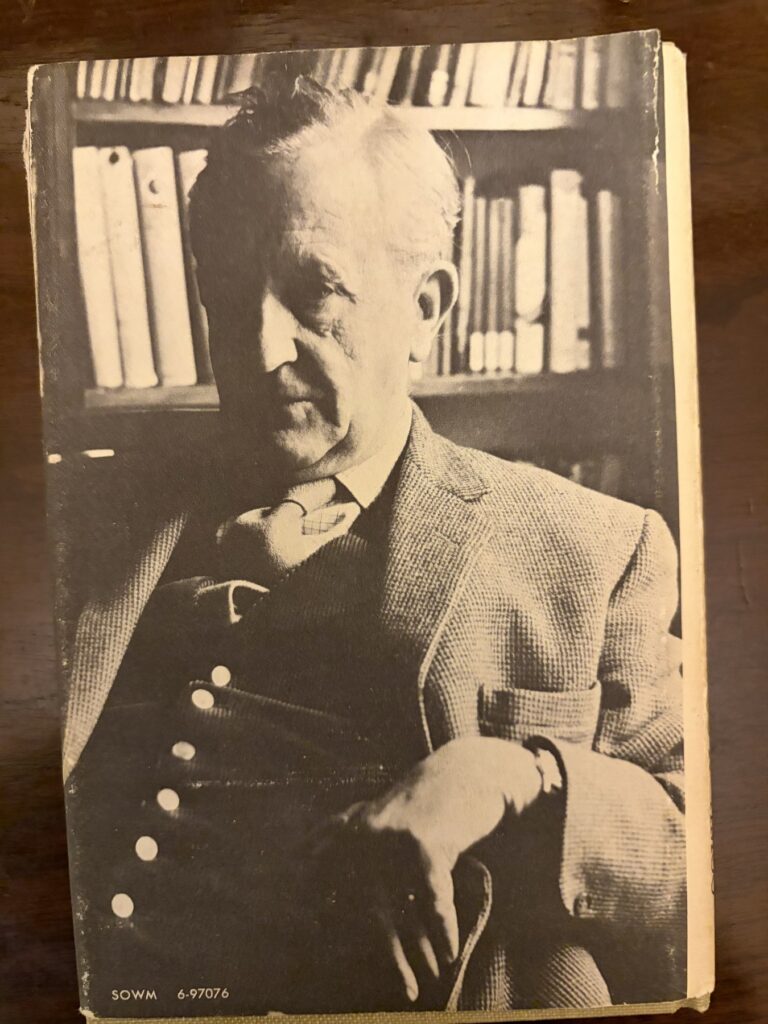
This copy is the first American edition, Houghton Mifflin, Boston, 1967, marked “First Printing” on the copyright page. It has Pauline Baynes’s illustrations (her jacket art of Smith gazing into the enchanted wood, plus the black-and-white tree frontispiece and the title-page vignette), and the back of the jacket carries a full-page photograph of Tolkien in his tweed jacket, seated before his bookshelves.
What’s Included
- Mr. Bliss (Houghton Mifflin, 1983), first American edition, in original dust jacket
- Farmer Giles of Ham (Allen & Unwin / Houghton Mifflin), Eleventh Impression, in original pictorial dust jacket with Baynes’s color frontispiece
- Smith of Wootton Major (Houghton Mifflin, 1967), first American edition, first printing, in original dust jacket with the full-page Tolkien portrait
- Sold together as one lot
Condition: Mr. Bliss is clean and bright inside. Its jacket shows wear, with chipping at the spine ends, a chip at the lower front corner, and light soiling. The Farmer Giles jacket is bright and clean with minimal wear. The Smith jacket has light toning, edge wear, and small chips at the spine ends, and the book inside is clean and tight.
Why This Matters
Most collectors chase The Hobbit and The Lord of the Rings. These are the books that show Tolkien as a father: drawing cars with his colored pencils, making up dragon stories in the rain, and in old age writing a fairy tale about giving the gift back.
They also make a set. Two are Pauline Baynes books from the collaboration that led straight to Narnia. One is Tolkien’s own hand and his own drawings. And one is a true first printing of the last story he lived to see published.
I don’t have a dramatic discovery story for these three. What I have is what they did to me. Reading how Tolkien made up stories for his own children, drawing Mr. Bliss’s yellow car in colored pencil and spinning a dragon tale to pass a rainy afternoon, made me want to do the same for mine. So for several years I wrote dragon stories, illustrated them, printed them just for my kids, and tucked them into their Christmas stockings. The first was The Dragon in the Drain, about a dragon who lived in a storm drain in the middle of the campus where I served as dean. None of them will ever sit on a shelf next to Farmer Giles, but they wouldn’t exist without it. These books have done their work in my house. I hope they’ll go to someone who loves Tolkien the storyteller and father as much as Tolkien the maker of Middle-earth, and maybe they’ll inspire a few more homemade dragons.
How to bid
The three books will be sold together as a single lot by silent bid.
- Email your bid to daniel@theolatte.com with the subject line “Bid: Tolkien at Home Collection.”
- Include your name, your bid in U.S. dollars, and the best way to reach you.
- If your bid is close to what I’m looking for, I’ll follow up with you personally.
- You can view my ebay seller ratings and my etsy shop ratings/reviews to check on my standard of business. I’ve got good reviews and I want to make sure you are pleased.
- If your bid is accepted, you’ll send your payment through Venmo.
- If requested, and you send an acceptable bid, I can do a video call for you to better inspect your item before sending payment.
- After I receive your payment, I will send the item first class with sufficient insurance to cover the value and send you the tracking number.
Please bid responsibly. I won’t be haggling much over price, so send your best offer the first time. The bid you send is the one I’ll consider. If it is close, I’ll either send a notice of acceptance with directions for next steps, or a counter offer. If you don’t hear back within a few days, feel free to send a higher bid.

